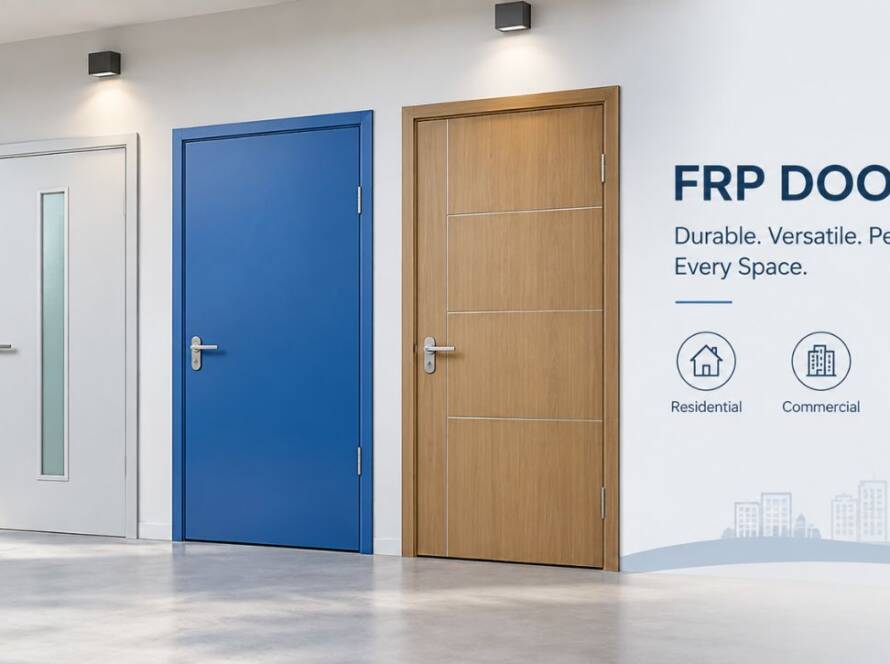
Choosing an FRP door is only one part of a successful installation. The door must also fit the available opening, match the frame, and suit the way the room is used. A small measurement error can lead to fitting problems, extra labour, unwanted gaps, or delays in a construction project.
For homeowners, builders, contractors, and interior professionals in Gujarat, planning these details before ordering an FRP door can make the entire process smoother.
Whether you are renovating a bathroom in Ahmedabad, fitting out apartments in Gandhinagar, or managing a commercial project in Surat or Vadodara, understanding the measurement and installation requirements will help you make a more informed purchase.
Why Accurate FRP Door Measurements Matter :
An FRP door is manufactured from fibre-reinforced plastic, a composite material used in residential and commercial construction. However, even a durable door cannot perform properly if it is incorrectly sized or poorly installed.
An opening that is too narrow may require additional masonry or frame adjustments. An oversized door may need trimming, which should never be done without checking the manufacturer’s recommendations. Incorrect clearances can also cause the door to rub against the frame or floor.
Accurate measurements are especially important when several doors are being installed in one project. Even if every doorway appears similar, actual dimensions can vary from room to room.
The practical approach is simple: measure every opening individually rather than assuming that all doors will have identical dimensions.
Step 1: Measure the Door Opening Correctly :
Before contacting an FRP door manufacturer or supplier, take the basic measurements of the opening.
Measure the width at three points: near the top, in the middle, and near the bottom. Record all three readings. If they differ, the opening may not be perfectly square.
Measure the height on both sides: measure from the intended finished floor level to the top of the opening at the left and right sides. This is important when flooring or tiling is not yet complete.
Check the wall thickness: this helps determine whether the proposed frame is suitable for the wall construction.
Always record measurements in millimetres or another consistent unit. Do not mix inches and millimetres on the same measurement sheet.
One important detail: the structural opening, the frame opening, and the actual door shutter are not necessarily the same size. Ask the supplier which dimensions are required before placing your order.
Step 2: Check the FRP Door Frame Before Ordering :
The door and frame must work together. Ordering a shutter without confirming frame compatibility can create unnecessary installation difficulties.
If the project already has a frame, check its condition, dimensions, alignment, and compatibility with the proposed FRP door. A damaged, loose, or uneven frame may need attention before the new door is fitted.
For a new installation, discuss whether you need an FRP door with an FRP frame or a shutter compatible with another suitable frame arrangement. The correct option depends on the product design and installation conditions.
Also confirm how the frame will be fixed to the wall. The fixing method, supporting surface, and alignment all affect the final result.
For residential renovations, this check is particularly useful because the existing opening may have been designed for a different type of door. For projects where product standards are relevant, consult the Bureau of Indian Standards (BIS) to research applicable Indian Standards and verify the requirements for the specific door product.
Step 3: Choose the Right FRP Door for the Room :
Measurements are important, but the intended application matters just as much.
For bathrooms and toilets, moisture exposure, ventilation, privacy, and floor clearance should be considered together. An FRP bathroom door may be suitable for these locations, provided the selected product and installation details meet the requirements of the space.
For kitchens, utility areas, and wash zones, consider how frequently the door will be used and whether cleaning products or water may come into contact with its surface.
In offices, schools, hospitals, and commercial buildings, repeated use makes hardware selection, frame stability, and ease of maintenance important considerations.
For industrial applications, check chemical exposure, temperature conditions, fire-safety requirements, and other relevant specifications before selecting a door. FRP does not automatically mean that a door is fire-rated or resistant to every chemical. If you are comparing door materials for different rooms in your home, you can also explore WPC doors for residential interiors and evaluate the specifications required for your project.
The right specification depends on the actual environment, not simply the room name.
Step 4: Confirm Thickness, Hardware and Opening Direction :
Door thickness should be confirmed with the manufacturer rather than selected by guesswork. The appropriate thickness depends on the available product, its construction, frame compatibility, and intended use.
Before finalising the order, discuss the following details:
Required shutter dimensions and thickness.
Hinge type and hinge placement.
Handle, latch, and lock requirements.
Left-hand or right-hand opening, based on the site layout.
Available clearance around nearby walls, fittings and flooring.
Any special requirements for accessibility or commercial use.
For a bathroom, check that the door does not interfere with sanitary fittings or restrict movement. In a compact apartment, even the opening direction can affect convenience.
These checks are relatively simple before installation. Correcting them after the door has been fitted can be much more troublesome.
Step 5: Plan Installation Around Flooring and Wall Finishing :
One common planning issue occurs when a door is measured before the final floor level is established.
Suppose the bathroom still needs tiles, adhesive, or another floor finish. The finished floor may sit higher than the current surface, reducing the clearance beneath the door. If this is not considered, the shutter may scrape against the floor after installation.
Wall plastering and other finishing work can also change the final dimensions of an opening.
For this reason, coordinate door measurements with the contractor or installer. If the opening is measured before finishing work, clearly record the expected final floor and wall levels.
During installation, the frame should be aligned correctly, the fixing points should be secure, and the shutter should open and close without unnecessary friction. Any sealing required around a wet-area installation should follow the product manufacturer’s recommendations. For broader building-planning and safety considerations, refer to the National Building Code of India, while confirming the specific requirements applicable to your project.
Common Mistakes to Avoid When Buying FRP Doors :
Several avoidable errors can complicate an otherwise straightforward installation.
The first is measuring only one side of the opening. Uneven walls and floors can make a single reading misleading.
The second is assuming that the existing frame will fit every FRP door. Compatibility must be confirmed.
The third is ordering all the doors for a project using one standard measurement without checking each opening.
Another mistake is choosing a product based only on appearance or price, without reviewing its intended application, hardware requirements, and relevant specifications.
Finally, avoid assuming that every FRP door has identical strength, construction, finish, or performance. Ask for the specifications of the actual product being supplied.
Finding FRP Doors for Residential and Commercial Projects in Gujarat :
When sourcing FRP doors, buyers should look beyond the product photograph. Clear dimensions, frame options, product specifications, finish choices, and dependable communication make the ordering process easier.
Umiya Poly Product manufactures and supplies FRP doors and related products for residential and commercial requirements. Buyers from Ahmedabad, Gandhinagar, Surat, Rajkot, Vadodara, and other parts of Gujarat can discuss their project requirements before finalising an order.
Before requesting a quotation, keep your measurements ready and mention the number of doors, intended application, preferred design, frame requirements, and delivery location. This gives the supplier a clearer understanding of your needs and helps avoid confusion during the quotation process.
For your next project, explore the available FRP Doors from Umiya Poly Product and enquire about a suitable option for your space. If you are still comparing door options for different applications, read our article on choosing the right FRP door for bathrooms, industries and commercial spaces before finalising your requirements.
Get the Right FRP Door for Your Project :
Looking for quality FRP doors for your home or commercial space? Contact Umiya Poly Product to discuss your requirements and find a suitable solution for your project.
Explore our FRP Doors and request a quotation today!
FAQs :
How do you measure an FRP door opening before ordering?
Measure the opening width at the top, middle, and bottom, and the height on both sides. Record the wall thickness and check the finished floor level. Share these measurements with your supplier and confirm whether they need the structural opening size, frame size, or door shutter dimensions.
What is the standard size of an FRP door in India?
FRP doors are available in different sizes depending on the manufacturer’s product range and intended application. The correct size depends on the available opening, frame compatibility, and site requirements. Confirm the actual dimensions with the supplier before placing an order, especially for renovation or commercial projects.
Can an FRP door be installed in an existing door frame?
Yes, an FRP door may be compatible with an existing frame, but this depends on the frame’s dimensions, condition, alignment, and the door’s design. Check the hinge positions and fixing arrangements before ordering. If the frame is damaged or uneven, it may require repair or replacement.
What thickness should I choose for an FRP bathroom door?
The suitable thickness depends on the product’s construction, intended use, and frame compatibility. Instead of choosing thickness based on appearance alone, ask the manufacturer for the available specifications and recommended application. Also check the door’s dimensions, hardware compatibility, and installation requirements.
Are FRP doors suitable for bathrooms in Gujarat's climate?
FRP doors can be suitable for bathrooms and other moisture-exposed areas when the selected product is designed for that application. Check the manufacturer’s moisture-resistance specifications, frame arrangement, and installation recommendations. Proper fitting and suitable sealing around wet areas are also important.
How much clearance should be left below an FRP door?
The required bottom clearance depends on the door design, finished floor level, ventilation needs, and installation specifications. There is no single clearance suitable for every installation. Account for tiles, adhesive, and other floor finishes before fixing the frame to help prevent the door from scraping against the floor.
What should I check before installing an FRP door in a new house?
Check the opening dimensions, wall thickness, frame compatibility, floor-finish level, hinge positions, locking system, and door-opening direction. For bathrooms, also consider nearby sanitary fittings and ventilation. Confirm these details with the installer before the final door measurements are approved.
Can FRP doors be customised for apartments and commercial projects?
Customisation depends on the manufacturer’s available product range and production capabilities. Buyers should confirm whether the required dimensions, colours, finishes, frame options, and hardware arrangements are available. For projects involving multiple doors, prepare an opening-wise measurement schedule to reduce ordering and installation errors.
How can I check the quality of an FRP door before buying?
Ask the supplier for product specifications, construction details, available thicknesses, finish options, and suitability for the intended application. Inspect a sample where possible and check the surface finish, edges, frame compatibility, and hardware arrangement. For commercial projects, request any relevant test reports or compliance documents required by the project.
Where can I buy FRP doors in Ahmedabad and other cities of Gujarat?
Buyers can contact Umiya Poly Product to discuss FRP door requirements for residential and commercial projects. Before requesting a quotation, share the required quantity, opening measurements, intended application, preferred design, frame requirements, and delivery location. Confirm product availability, specifications, and delivery arrangements directly with the company.