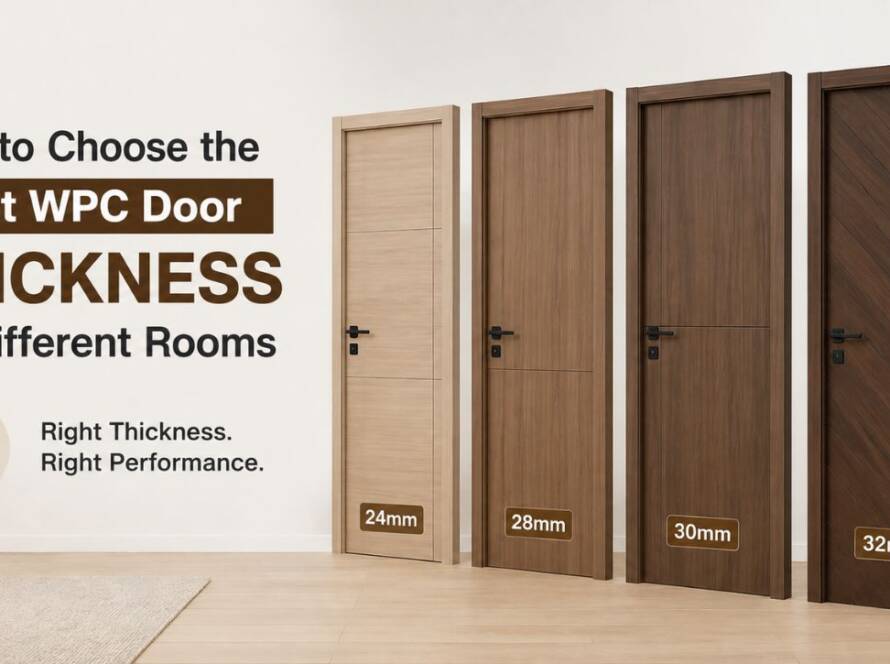
If you are searching for WPC doors in Gujarat, chances are you are not simply looking for another door. You want to know whether a WPC door can handle moisture, how long it can last, whether its frame is reliable, and how it compares with FRP or traditional flush doors.
These questions matter, especially in homes, apartments, offices, and commercial spaces where doors are exposed to humidity, regular cleaning, and changing weather conditions.
So, what exactly is a WPC door, and where does it make practical sense?
What Is a WPC Door?
WPC stands for Wood Plastic Composite. A WPC door is manufactured using a composite material made from wood-based components and polymer materials. Unlike conventional wooden doors, its composition is designed to reduce the problems commonly associated with moisture and wood.
The term “WPC door” does not automatically mean every product has identical quality. Manufacturing process, material composition, density, surface finish, internal construction, and installation all influence the final performance.
That is why buyers should look beyond appearance when choosing a WPC door.
For homeowners in Gujarat, this distinction is particularly useful when selecting doors for bathrooms, utility areas, bedrooms, kitchens, or other locations where moisture resistance is important.
Is a WPC Door Waterproof?
One of the most common questions is: Is a WPC door waterproof?
WPC doors are generally known for their resistance to moisture and water compared with conventional wood-based doors. This is one reason they are frequently considered for bathrooms and other damp areas.
However, “water-resistant” and “completely waterproof under every condition” should not be treated as identical claims.
The quality of the WPC material, edge finishing, hardware installation, frame construction, and sealing around the door can affect real-world performance. Poor installation can create problems even when the door material itself is suitable for wet conditions.
For bathroom applications, proper fitting and sealing are therefore just as important as selecting the right door.
How Long Does a WPC Door Last?
Another important search is WPC door lifespan or WPC door life.
There is no single lifespan figure that applies to every WPC door. A well-manufactured door that is correctly installed and maintained can provide long-term service, but its actual life depends on several factors.
Material quality is the starting point. Then come door thickness, structural strength, hardware, installation accuracy, exposure to moisture, frequency of use, and maintenance.
A bedroom door used gently will naturally experience different conditions from a commercial washroom door that is opened and closed hundreds of times every week.
In other words, the lifespan of a WPC door should be evaluated as a combination of product quality + installation + application rather than a single number printed on a brochure.
What Is a WPC Door Frame?
The frame deserves attention because a good door installed with an unsuitable or poorly fitted frame can affect the overall result.
A WPC door frame is designed to complement WPC doors and provide a stable structure for installation. It can be particularly useful in areas where conventional wooden frames may face concerns related to moisture.
But buyers should not assume that every WPC frame has the same performance. Frame density, dimensions, reinforcement, fixing method, and installation quality matter.
This is also why questions about WPC door frame disadvantages often come up. Potential issues can arise when an unsuitable frame is selected, the frame is not properly supported, or installation is handled without considering the door’s weight and hardware requirements.
The right frame should be selected according to the application rather than simply choosing the cheapest available option. For broader information on Indian building requirements and construction practices, readers can refer to the National Building Code of India published by the Bureau of Indian Standards.
WPC Door vs FRP Door: What Is the Difference?
The FRP vs WPC door comparison is another major area of interest among buyers.
FRP, or Fibre Reinforced Plastic, is a different composite material, and you can learn more about FRP doors before comparing the two options. FRP doors are widely used where resistance to moisture, corrosion, and demanding environments is important. WPC doors, on the other hand, are often selected when buyers want a composite door with a more wood-like appearance and feel.
Neither material is automatically better for every application.
For a bathroom or utility area, moisture resistance may be a priority. For a bedroom, appearance, finish, rigidity, and overall design may receive more attention. For commercial environments, cleaning requirements and frequency of use can become more important.
The practical question is not simply “FRP door or WPC door which is better?” It is which material is better suited to the location and usage?
WPC Door vs Flush Door :
A flush door vs WPC door comparison becomes important when renovating a home or selecting doors for a new property.
Traditional flush doors can offer a familiar appearance, wide availability, and numerous finish options. Their performance, however, depends heavily on the core material, surface treatment, edge protection, and exposure to moisture.
WPC doors are often considered where moisture resistance and reduced dependence on conventional wood-based construction are priorities.
For dry interior spaces, both options can make sense depending on the specification. For areas exposed to water or humidity, the material’s moisture behaviour becomes a much more important consideration.
So, when comparing a WPC door or flush door, look at the application first—not just the initial purchase price. Price can also influence the final decision, but the cost depends on factors such as material quality, thickness, size, finish, frame and installation requirements. For a detailed breakdown, see our guide on WPC Door Price in Gujarat.
When comparing different door materials, it is also useful to understand the Indian standards applicable to building products; BIS publishes information on Indian Standards for doors and windows that can help buyers and professionals understand relevant specifications.
Are There Any Disadvantages of WPC Doors?
Yes. Like every door material, WPC doors have limitations.
Their price may be higher than some basic conventional door options. Product quality varies significantly between manufacturers, and a low-quality WPC product should not be compared with a properly engineered premium product.
Weight, hardware compatibility, installation requirements, and availability of matching frames or accessories can also vary between products.
This is why searches for WPC door disadvantages are useful. Understanding limitations before buying helps customers make a more realistic decision instead of choosing purely on marketing claims.
Which WPC Door Is Suitable for Gujarat Homes?
For homeowners searching for WPC doors in Ahmedabad, Vadodara, Rajkot, and other parts of Gujarat, the right choice depends largely on where the door will be installed.
Bathroom doors need strong moisture resistance and proper edge and frame treatment. Bedroom doors may place greater emphasis on appearance and finish. Main-door applications require careful consideration of structural strength, security hardware, thickness, and installation.
The best approach is to discuss the application with an experienced WPC door manufacturer or supplier before finalising the product.
At Umiya Poly Product, we focus on helping customers choose WPC door solutions according to their actual requirements rather than treating every application in the same way. From residential projects to practical moisture-prone areas, product selection should be based on material quality, intended use, and installation conditions.
If you are looking for WPC door manufacturers in Gujarat or need assistance selecting a suitable WPC door and frame, contact Umiya Poly Product to discuss your requirement.
Final Thought :
A WPC door is more than just an alternative to a wooden door. Its suitability depends on where it is being used, how it is manufactured, what frame is selected, and how professionally it is installed.
Whether you are comparing WPC vs FRP doors, checking the difference between a WPC door and a flush door, researching WPC door lifespan, or simply asking whether a WPC door is suitable for a bathroom, the answer should always begin with the application.
That is the smarter way to choose a door—and it can save you from replacing the wrong product later.
Choose the Right WPC Door for Your Space :
Looking for a WPC door in Gujarat? Get expert guidance on the right door, frame, size, and finish for your project.
Ready to explore your options? Visit our WPC Doors range to check available solutions and choose a door based on your space, usage and design requirements.
Talk to Umiya Poly Product today and get a WPC door solution that fits your requirements.
FAQs :
What is a WPC door and what does WPC stand for?
WPC stands for Wood Plastic Composite. WPC doors are manufactured using a composite material made from wood-based components and polymers. They are designed as an alternative to conventional wood-based doors, particularly where moisture resistance and lower sensitivity to water exposure are important. However, WPC doors can differ considerably in density, construction, finish, and overall quality, so buyers should evaluate the manufacturer’s specifications rather than choosing only by appearance or price.
Is a WPC door waterproof and suitable for bathrooms?
WPC doors are generally moisture-resistant and suitable for many bathroom applications, which is one reason they are increasingly considered for wet areas. However, the term waterproof should not be interpreted as meaning that every WPC door will perform identically under continuous water exposure. Door quality, edge treatment, frame selection, hardware, sealing, and installation all affect performance. For a bathroom, choosing an appropriate WPC door and having it professionally installed is important for long-term reliability.
What is the lifespan of a WPC door?
There is no universal lifespan for every WPC door because service life depends on material quality, thickness, construction, installation, hardware, frequency of use, and environmental conditions. A properly manufactured and correctly installed WPC door can provide long-term service when used within its intended application. Instead of relying on a fixed number of years, customers should ask the manufacturer about material specifications, intended usage, warranty, and recommended installation practices.
What are the disadvantages of WPC doors?
WPC doors are not suitable for every situation without considering the product specifications. Some WPC doors can cost more than basic conventional door options, and product quality varies between manufacturers. Weight, hardware compatibility, frame requirements, finish options, and installation methods may also differ. The most reliable way to assess the disadvantages of WPC doors is to compare the actual product specification with the location and level of usage rather than judging the entire category from one product.
WPC door vs FRP door: which is better?
There is no single answer to whether a WPC door or FRP door is better because both materials have different characteristics. FRP, or Fibre Reinforced Plastic, is widely used where moisture, corrosion, and demanding operating conditions are important. WPC is often preferred when customers want a composite door with a more wood-like appearance and feel. For bathrooms, bedrooms, utility areas, and commercial spaces, the better choice depends on moisture exposure, design requirements, durability expectations, maintenance, and installation conditions.
WPC door vs flush door: which one should I choose?
The choice between a WPC door and a flush door should be based on the intended application rather than price alone. Flush doors are widely available and come in many finishes, while WPC doors are often considered when moisture resistance and reduced dependence on conventional wood-based construction are priorities. For dry interior rooms, either may be suitable depending on the specification. For moisture-prone locations, the water and moisture behaviour of the door becomes a more important purchasing factor.
Is a WPC door good for a bedroom?
Yes, a WPC door can be suitable for a bedroom, particularly when the homeowner wants a durable composite door with a clean finish and resistance to moisture-related concerns. Bedroom doors usually experience less water exposure than bathroom doors, so appearance, thickness, surface finish, hardware compatibility, and overall construction may become more important. The final choice should be based on the specific WPC door specification and the design requirements of the room.
Is a WPC door suitable for a main door?
A WPC door can be considered for some main-door applications, but the requirements are different from those of an internal bedroom or bathroom door. A main entrance needs appropriate structural strength, thickness, hardware compatibility, locking arrangements, frame support, and installation. Buyers should therefore confirm whether the selected WPC door has been designed for entrance-door use rather than assuming that every WPC door is suitable as a main door.
What should I check before buying a WPC door in Gujarat?
Before purchasing a WPC door in Gujarat, check the material quality, door thickness, density or construction, available sizes, finish, frame specification, hardware compatibility, moisture-resistance characteristics, installation requirements, and warranty terms. It is also useful to discuss where the door will be installed—such as a bathroom, bedroom, main entrance, office, or commercial property—because the correct specification can vary by application. Buying from an experienced manufacturer or supplier can also make product selection and after-sales support easier.
Where can I find reliable WPC door manufacturers in Gujarat?
Customers searching for WPC door manufacturers in Gujarat, including suppliers serving Ahmedabad, Vadodara, Rajkot, and other areas, should compare manufacturers based on product specifications, manufacturing experience, available designs and sizes, frame options, quality consistency, installation support, and customer service. Umiya Poly Product provides WPC door solutions for customers looking for practical, application-specific options. For the right recommendation, share your required size, location of installation, preferred finish, and intended use with the manufacturer before placing an order.